Pregnancy changes the rules of a yoga practice gradually and then all at once. Balance shifts, joints loosen under relaxin, blood volume climbs, and the belly eventually rewrites every forward fold. The practice itself remains one of the most useful forms of exercise in pregnancy for most women: it maintains strength, works the pelvic floor's neighborhood, eases the back and hip aches that arrive on schedule, and trains the breath control that labor will ask for. The key word is modification, applied early and without nostalgia for last trimester's practice.
This guide covers how prenatal practice adapts by stage, the heated-room question, which is the one expecting students at Charlotte studios ask first, and the poses and habits to leave behind for now. Studios such as Y2 Yoga run dedicated prenatal classes inside their regular lineup, and this explains both why those exist and how to practice safely in a general class when that is the option.
Trimester by trimester, roughly
In the first trimester most women can practice nearly normally, fatigue and nausea permitting, and the main discipline is honesty about energy. The second trimester is usually the golden stretch: energy returns while the belly is still manageable, and this is the time to build the strength and hip mobility the third trimester will spend. Balance begins to wander, so the wall becomes a legitimate prop, and lying flat on the back for long periods starts to suit fewer women as the uterus can press on major blood vessels.
By the third trimester the practice narrows to what serves: wide-stance standing work, supported squats, hip openers, side-lying rest, and breathing. Deep twists that compress the abdomen, prone poses, strong core work that domes the belly, and hot, crowded, maximal classes all leave the menu. A good instructor reads the room and offers the modifications before they are needed; in a dedicated prenatal class, the whole sequence is built from the safe list, which is its own relief.
- Clear it with your provider. Get your OB or midwife’s go-ahead, especially for heated rooms, before your first class.
- Tell the instructor, early and every time. How far along you are changes the modifications; instructors plan around what they know.
- Choose warmth carefully. Many expecting students prefer gentle or less-heated formats over full-heat power classes.
- Modify the core and the back. Skip deep closed twists, strong abdominal work, and long flat-on-your-back holds as pregnancy progresses.
- Use the props without ego. Blocks, bolsters, and a wider stance are what make poses fit a changing body.
- Hydrate and cool aggressively. More water, more breaks, and a spot near the door are smart, not cautious to a fault.
The heat question, answered carefully
Core temperature is the concern. Medical guidance for pregnancy consistently cautions against overheating, particularly in the first trimester, and a fully heated power class in the high nineties is a genuinely hot environment. Many providers clear experienced practitioners for moderate heated practice with strict hydration and exit discipline, and many others say choose the unheated or gently warm formats instead. This is a conversation for your own provider, who knows your pregnancy, and it should happen before the first heated class, not after.
The practical middle path most expecting students land on: gentle and deep-stretch formats in very warm rather than fully heated rooms, shorter exposure, a mat near the door, water constantly, and a personal rule that dizziness or nausea ends the session without debate. If you were a hot yoga regular before pregnancy, the adjustment is emotional as much as physical, and it helps to remember it is a season, not a retirement. The heated room will still be there.
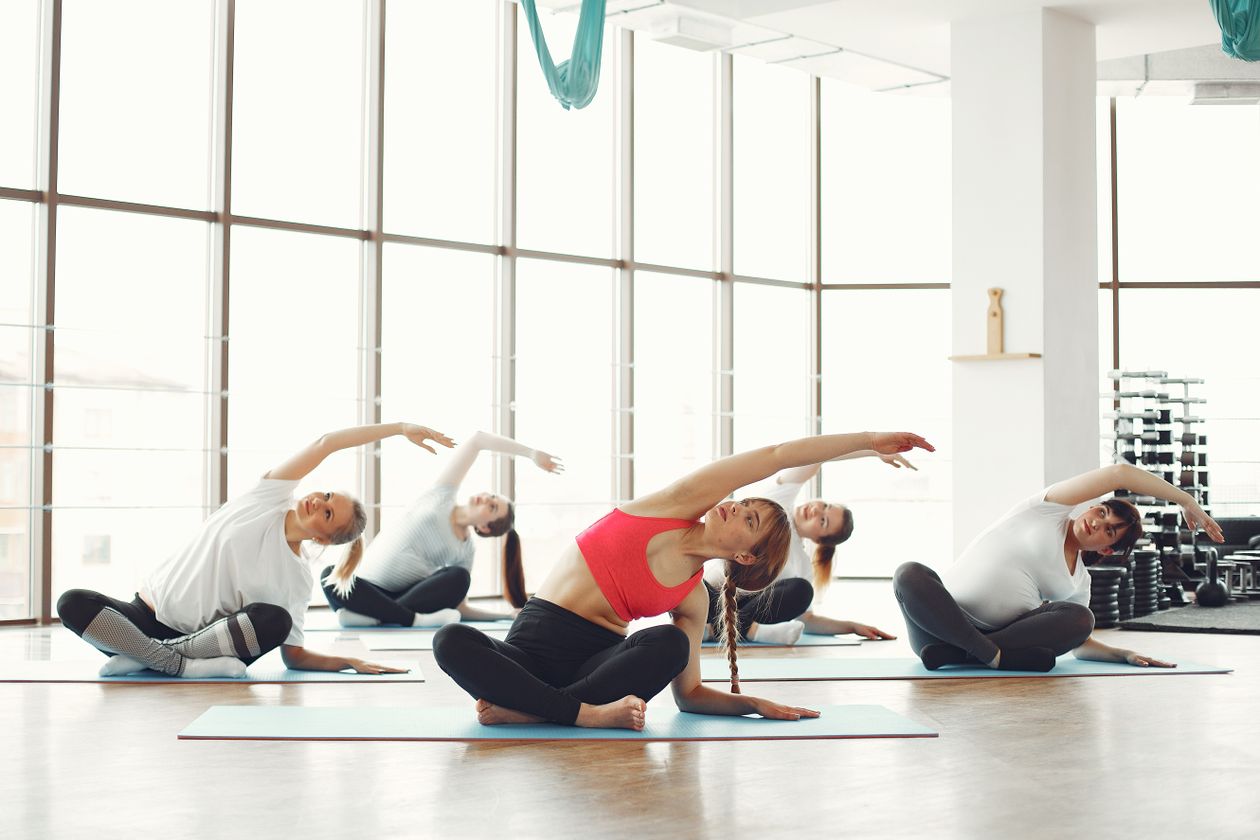
What prenatal practice gives back
The returns are concrete. Maintained leg and pelvic strength supports the work of late pregnancy and labor. Hip and back work addresses the two places pregnancy aches most reliably. Breath practice, slow exhales under effort, transfers directly. And the class community matters in a way that surprises people: a room of women in the same strange season, trading notes after class, is support that no app schedules for you.
After delivery, return on your provider's timeline, usually starting gently whenever clearance comes, and expect the practice to feel both familiar and foreign. The core and pelvic floor need rebuilding before intensity, and studios with prenatal programs usually have the postnatal on-ramp figured out too. Ask. The thread from prenatal class to first regular class back is one studios are glad to help you walk.
Common questions
Can I start yoga for the first time while pregnant?
Yes, in a prenatal-specific class with your provider's go-ahead. Prenatal classes are built for beginners. A heated power class is not the place to start anything new.
Are inversions safe in pregnancy?
For experienced practitioners early on, sometimes; for most students, they leave the practice as pregnancy progresses because of balance and blood pressure shifts. Your instructor will guide by trimester.
What should I do if I feel dizzy in class?
Stop, sit or lie on your side, sip water, and cool down. Tell the instructor. Dizziness in pregnancy is information, and the class will still be there next week.
Photos in this guide are representative stock images.
← All guides from Y2 Yoga← Back to Y2 Yoga