Yoga class menus confuse newcomers because the names are brands, not descriptions. One studio's signature flow, another's power hour, a third's deep stretch: underneath the names sit two fundamentally different kinds of class. Power flow is a workout that uses yoga poses. Deep stretch is a recovery practice that uses yoga poses. Both are valuable, and they do not substitute for each other, which is why busy Charlotte studios like Y2 Yoga run both on the same schedule, and why the regulars in the front row take both every week.
This guide compares the two formats plainly: what happens in the room, who each is for, and how to combine them across a week. If you are choosing a first class, the answer depends less on your fitness than on what you want to feel when you walk back out into the Sharon Amity parking lot.
Hot power flow: the workout
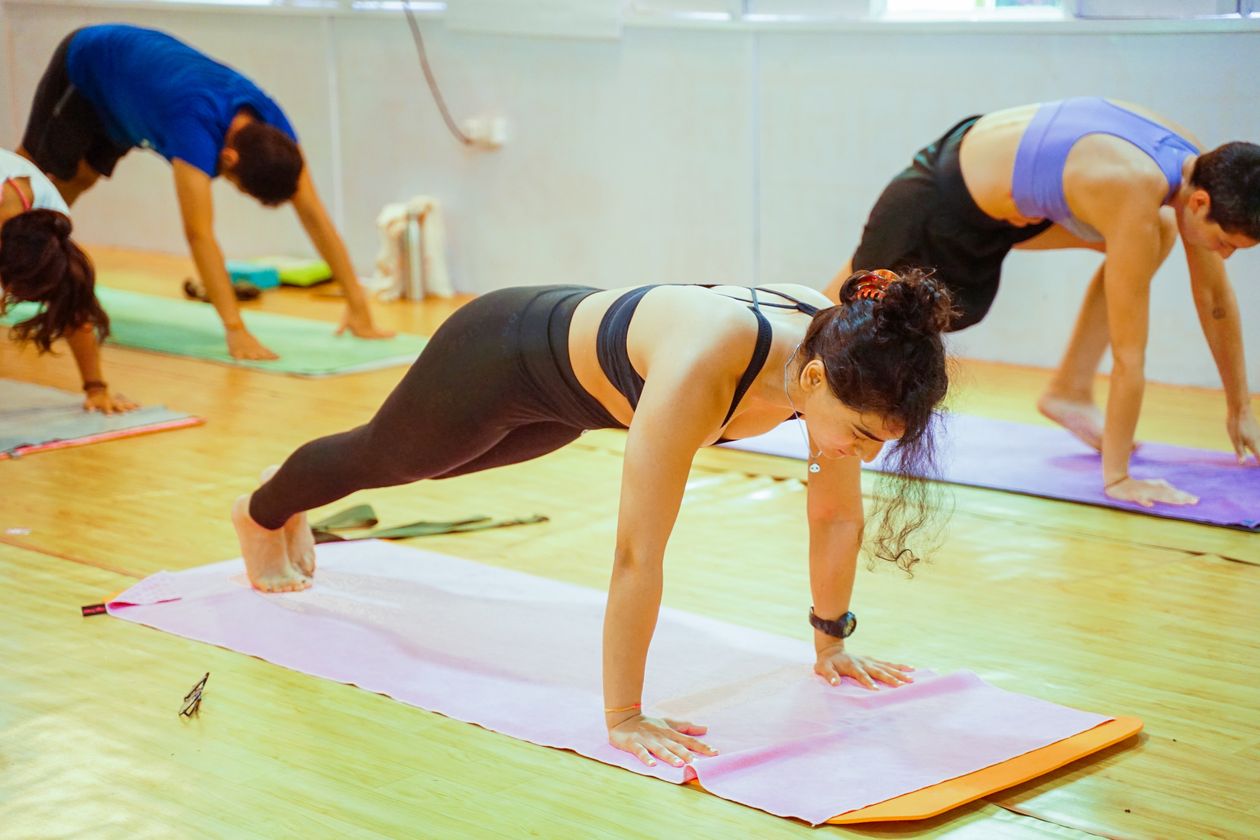
A power class moves. After a warm-up, you flow through standing sequences, plank work, and core sets with the breath setting the tempo, in a fully heated room. The standing series repeats, so your legs and shoulders accumulate real strength work, and the cardiovascular load is honest: hearts stay up, sweat is profuse, and the final rest at the end feels earned. Studios grade the intensity in steps, from slower learning-paced versions of the flow to doubled and tripled sequences for advanced students, so the format stretches from first class to tenth year.
Choose power when you want your yoga to be your exercise: strength, endurance, and the particular mental quiet that follows genuine exertion. It suits people who think better after moving hard, who cross-train and want mobility inside a workout rather than instead of one, and who like a class with momentum. Skip it, or take the gentlest version, on days you are ill, depleted, or returning from injury.
Deep stretch: the recovery practice
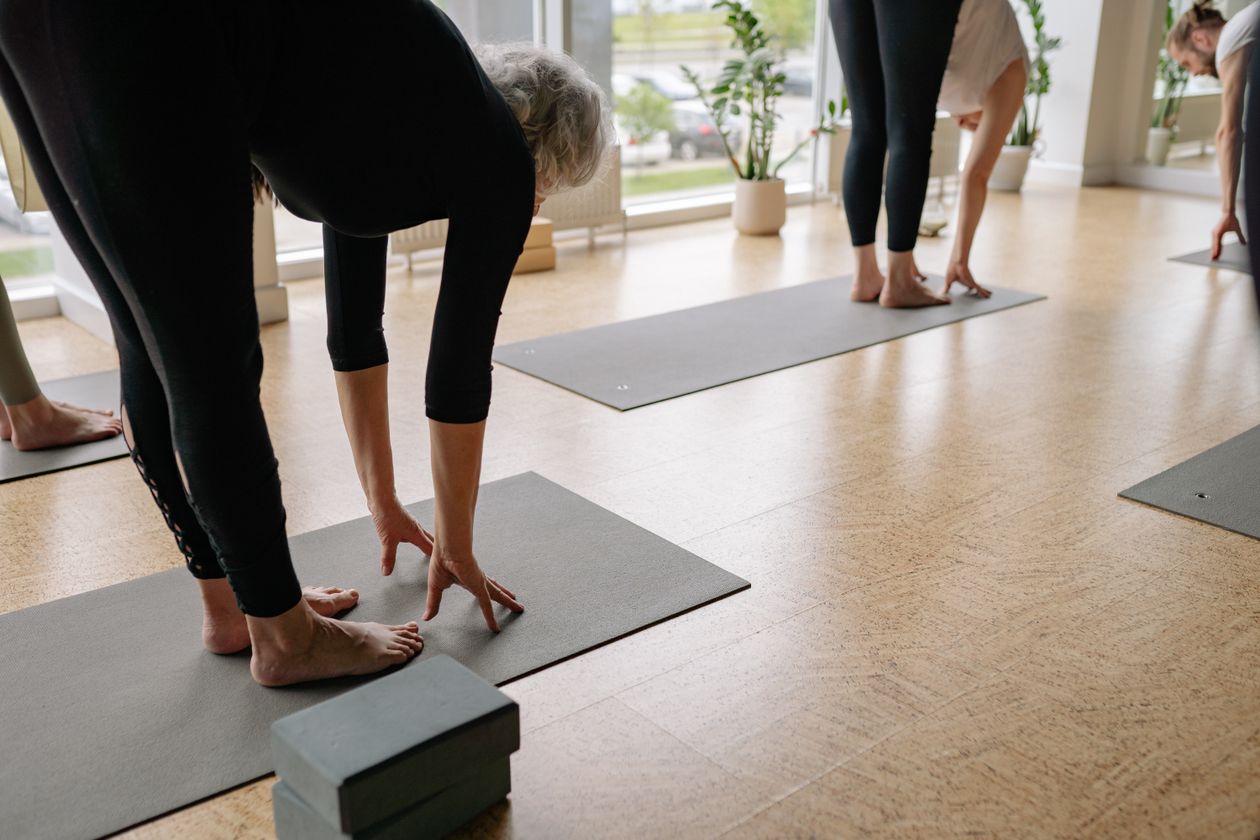
A deep stretch class slows everything down. After a gentle opening flow, the class moves to the floor and stays there, holding postures for two to four minutes each so the stretch reaches the connective tissue and the hips, hamstrings, spine, and shoulders open gradually. Some versions run in the full heat, others in a merely very warm room, and the atmosphere is closer to a reset than a workout. People fall briefly asleep in the final rest with some regularity, and nobody minds.
Choose deep stretch when the goal is range of motion, soreness relief, stress, or sleep. It is the format runners, lifters, and desk workers with locked hips are usually looking for, and the one physical therapists wish their patients would take. Because every hold is self-scaled, it is also the most beginner-proof class on most schedules: there is no sequence to memorize and no tempo to keep, just gravity, breath, and time.
| Question | Hot power flow | Deep stretch |
|---|---|---|
| Main goal | Strength, stamina, and sweat | Flexibility, range of motion, recovery |
| Pace | Continuous movement linked to breath | Long holds, mostly on the floor |
| Room | Fully heated | Heated, or very warm in not-as-hot versions |
| You leave feeling | Worked, wrung out, energized | Loose, calm, a little taller |
| Best day for it | A fresh day when you want a workout | The day after hard training, or a stressful day |
| Beginner entry | The slower-paced half version of the flow | Any class; holds are self-scaled |
Combining them across a week
The two formats cover each other's gaps. Power builds strength and work capacity but can tighten the very muscles it loads; stretch restores range and downshifts the nervous system but will not make you stronger. A common sustainable pattern is two power classes and one stretch class a week, with the stretch placed after the hardest training day or at the week's end. People who do only power plateau on flexibility; people who do only stretch plateau on strength. The schedule at most studios is built to make mixing easy.
Listen for the day's honest answer. A power class taken exhausted teaches your body to survive the room rather than train in it, and a stretch class taken restless can feel endless. The studios' real product is the menu, not any single class. Use the whole of it, and let each format do the job it is actually for.
Common questions
Which class burns more calories?
Power flow, by a wide margin. It is continuous, heated, strength-based movement. Deep stretch is deliberately low-exertion; its benefits are mobility and recovery, not energy burn.
I lift weights. Which class helps me more?
Both, in sequence: deep stretch for the hips, shoulders, and hamstrings that lifting tightens, and power for core strength and conditioning. If you pick one to start, pick stretch.
Is deep stretch just an easy class?
It is low-exertion but not always comfortable. Long holds in deep hip and hamstring poses are intense in their own way. The effort is patience rather than power.
Photos in this guide are representative stock images.
← All guides from Y2 Yoga← Back to Y2 Yoga