The question new yoga students actually need answered is not which pose to learn. It is how many classes a week, of what kind, in what order, such that three months from now they are still going. Most beginners fail on scheduling rather than ability: they start at five ambitious classes a week, burn out or get sore enough to stop by week three, and conclude yoga was not for them. A routine that survives contact with a Charlotte work schedule, family logistics, and ordinary human motivation is a design problem, and it has known solutions.
This guide builds a beginner's weekly routine from the standard class formats, power flow, short flow, and deep stretch, in proportions that develop strength, mobility, and the habit itself. It assumes a studio with a full schedule, like Y2 Yoga with its three Charlotte-area locations, because routine design gets much easier when a missed class at one studio is a made-up class at another time or place.
The starter pattern: two plus one
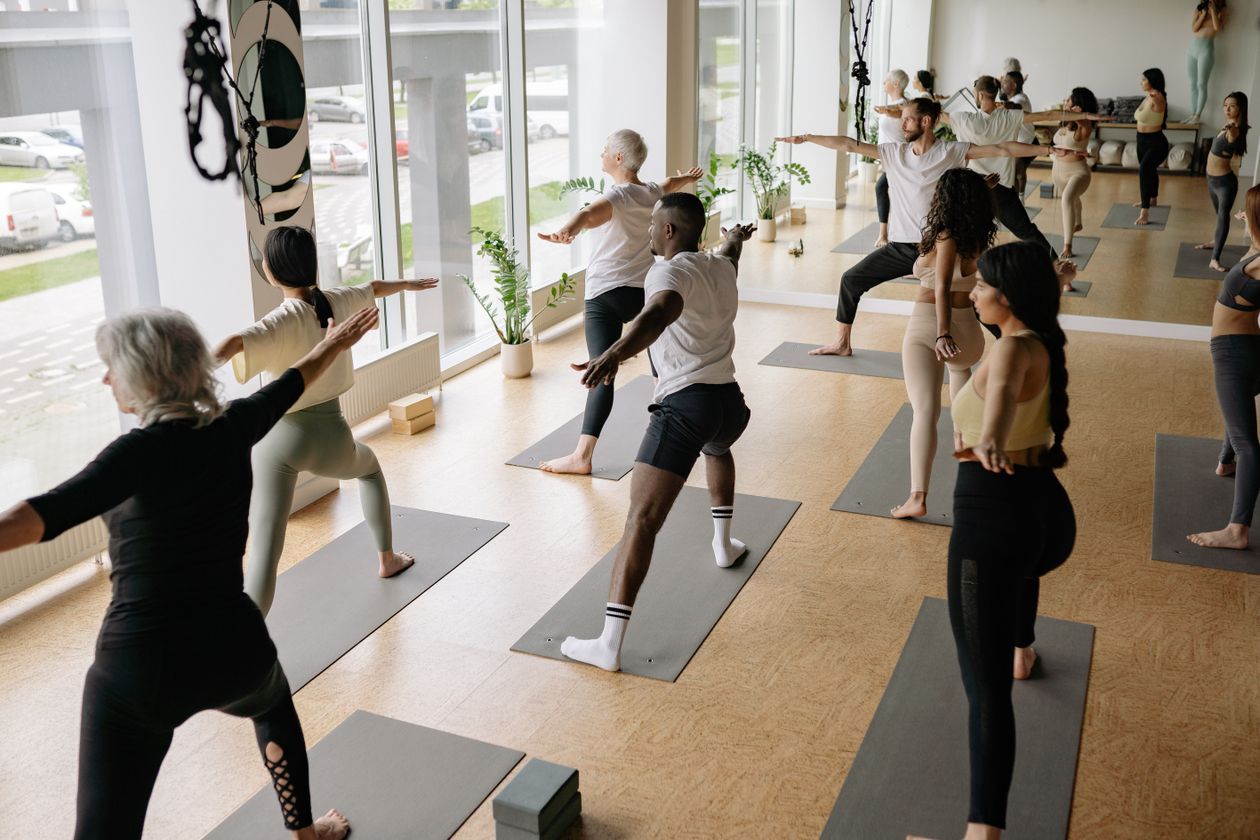
Begin with three classes a week: two flowing classes at the gentler intensity and one deep stretch. The two flows build strength, coordination, and heat tolerance, and they are where the skills live. The stretch class does the recovery work, keeps soreness from stacking, and gives the week a session you look forward to rather than brace for. Three classes also crosses the public-health activity guidelines when the flows run an hour, which is a useful external check that the routine is a real training load and not a gesture.
Anchor the classes to existing fixtures rather than motivation: the same mornings, the same evening after work, booked in the calendar like meetings. Routine research and plain experience agree that attached habits survive and floating intentions do not. Lay out clothes and the mat the night before for early classes. The person who decides at 5:40 AM loses to the person who decided at 9 PM, almost every time.
Scaling up without breaking it
After three or four consistent weeks, add load in one direction only. Either add a fourth class, usually a short 45-minute flow fitted into a lunch break or a gap, or step one weekly flow up to the standard intensity from the learning pace. Never both in the same week. Soreness is the governor: mild next-day soreness is the system working, while accumulating joint aches, declining sleep, or dreading class are the system billing you. Deep stretch frequency can rise freely; it is the one format where more is almost always fine.
By month three a sustainable full routine for most people is three to four classes: two power or standard flows, one short flow or second stretch, arranged so no more than two hard days touch. Rest days are part of the program, because the adaptations, strength, flexibility, heat tolerance, all consolidate between sessions, not during them. The goal of the design is a routine you can run for a year, and a year of three classes a week beats a month of six followed by nothing, by an enormous margin.
Keeping it alive through real life
Travel, illness, deadlines, and kids will interrupt any routine; the design question is whether the interruption becomes the end. Two rules help. First, the floor rule: in a bad week, one class of any kind keeps the thread unbroken, and one class is always schedulable. Second, the restart rule: after a break longer than two weeks, re-enter with a stretch class and a gentle flow regardless of where you left off, because heat tolerance and tissue readiness fade faster than confidence does.
Use the studio's variety as the long-term retention tool it is. Different teachers, a different location across town, a workshop, or a short-format class at a new time of day all refresh the routine without changing its skeleton. The students still practicing at year two are rarely the most talented from week one. They are the ones whose routine was built to survive their actual lives, and who let it bend weekly instead of breaking once.
Common questions
How many classes a week should a beginner take?
Three is the sweet spot: two flowing classes and one deep stretch. It builds strength and flexibility, crosses standard activity guidelines, and stays sustainable for most schedules.
Can I do hot yoga every day?
Experienced practitioners do, with hydration and intensity varied across days. For beginners, daily heated classes outrun recovery; build to it over months if you want it at all.
What if I can only make it twice a week?
Then twice a week, one flow and one stretch, done consistently for a year, will change your strength, mobility, and stress more than any heroic month. Consistency is the program.
Photos in this guide are representative stock images.
← All guides from Y2 Yoga← Back to Y2 Yoga